
Introduction to Progressive Web Apps
In the rapidly evolving digital world, users expect fast, reliable, and engaging online experiences. Traditional websites and mobile applications often fail to meet these expectations due to slow loading times, high development costs, and limited accessibility.
Progressive Web Apps combine the best features of websites and mobile applications. They offer high performance, offline access, push notifications, and app-like experiences without requiring users to download them from app stores.
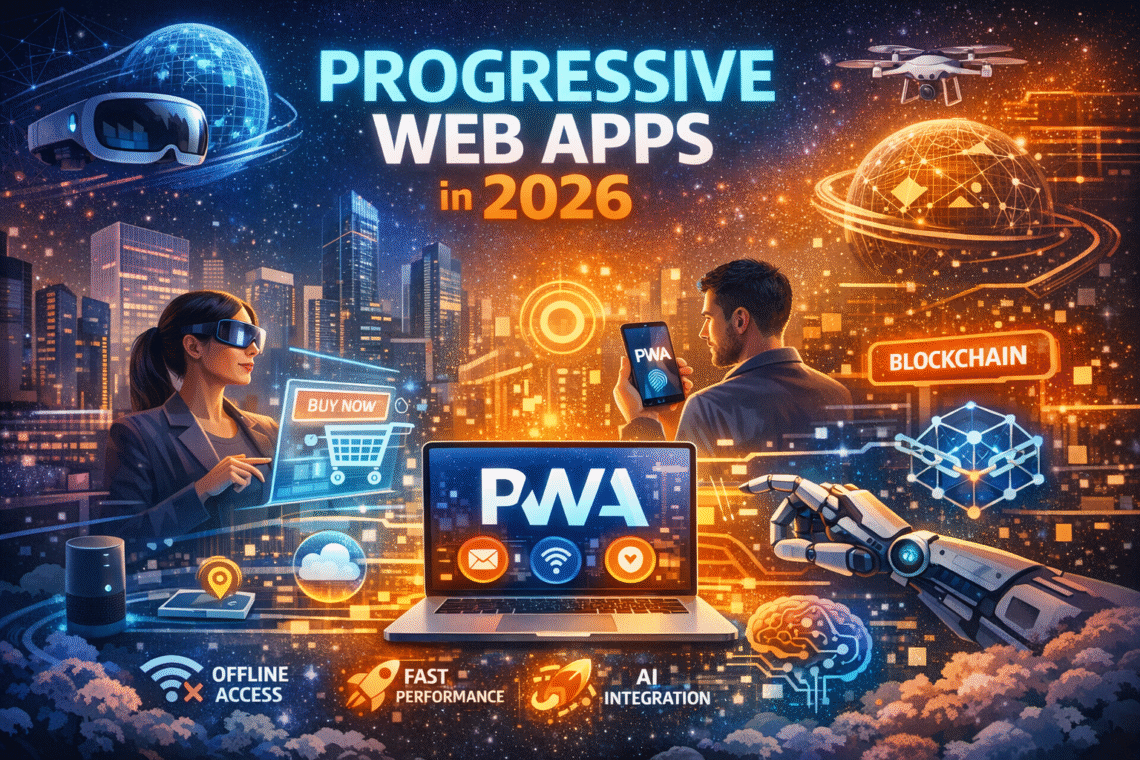
By 2026, Progressive Web Apps have become one of the most important technologies in web development. Businesses, developers, and organizations across industries are adopting PWAs to improve user engagement, reduce costs, and increase conversions.
This guide explains everything you need to know about Progressive Web Apps, including their working mechanism, advantages, applications, challenges, and future potential.
What Are Progressive Web Apps?
Progressive Web Apps are web-based applications that use modern web technologies to deliver app-like experiences on any device. They work through browsers but function like native mobile apps.
A Progressive Web App is built using standard technologies such as:
- HTML
- CSS
- JavaScript
- Service Workers
- Web App Manifest
These technologies allow Progressive Web Apps to operate offline, load quickly, and send notifications.
Simply put, Progressive Web Apps are websites that behave like mobile applications.
Key Characteristics of Progressive Web Apps
Progressive Web Apps have several important features that make them unique.
1. Progressive
They work for all users regardless of browser type.
2. Responsive
Progressive Web Apps adapt to all screen sizes.
3. Offline Support
They function without an internet connection.
4. App-Like Interface
They provide smooth navigation and animations.
5. Secure
All Progressive Web Apps run on HTTPS.
6. Installable
Users can install them on home screens.
7. Linkable
They can be shared via URLs.
These features make Progressive Web Apps highly user-friendly.
Evolution of Progressive Web Apps
The concept of Progressive Web Apps was introduced by Google in 2015. Initially, they were simple offline websites. Over time, they evolved into powerful platforms.
Early Stage
- Limited browser support
- Basic offline access
- Simple caching
Growth Phase
- Improved APIs
- Push notifications
- Better device integration
Modern Era (2026)
By 2026, Progressive Web Apps support:
- Biometric authentication
- AI integration
- Voice interfaces
- IoT connectivity
- Advanced caching
This evolution has made Progressive Web Apps suitable for enterprise-level applications.
How Progressive Web Apps Work
Progressive Web Apps rely on three main components.
1. Service Workers
Service workers act as background scripts. They manage:
- Caching
- Offline access
- Push notifications
- Background sync
They are the backbone of Progressive Web Apps.
2. Web App Manifest
The manifest file defines:
- App name
- Icons
- Theme colors
- Display mode
It enables installation of Progressive Web Apps.
3. HTTPS Protocol
HTTPS ensures secure data transmission in Progressive Web Apps.
Together, these elements create a seamless experience.
Benefits of Progressive Web Apps
1. Improved Performance
Progressive Web Apps load faster than traditional websites.
2. Cost Efficiency
One PWA works across multiple platforms, reducing development cost.
3. Offline Accessibility
Users can access content anytime.
4. Increased Engagement
Push notifications boost interaction.
5. Better Conversion Rates
Fast loading leads to higher sales.
6. Easy Maintenance
Single codebase simplifies updates.
7. SEO Friendly
Search engines index Progressive Web Apps easily.
These benefits make Progressive Web Apps highly attractive.
Applications of Progressive Web Apps in Different Industries
1. E-Commerce
Online stores use Progressive Web Apps for:
- Faster browsing
- Product recommendations
- Secure payments
- Cart recovery
2. Healthcare
Healthcare PWAs provide:
- Appointment booking
- Telemedicine
- Health monitoring
- Patient records
3. Education
Educational institutions use Progressive Web Apps for:
- E-learning
- Virtual classrooms
- Online exams
- Digital libraries
4. Banking and Finance
Banks rely on Progressive Web Apps for:
- Account management
- Digital payments
- Loan services
- Fraud detection
5. Travel and Tourism
Travel companies use PWAs for:
- Booking systems
- Travel updates
- Hotel reservations
- Maps integration
6. Media and News
News platforms use Progressive Web Apps for instant updates.
Progressive Web Apps vs Native Apps
| Feature | Progressive Web Apps | Native Apps |
|---|---|---|
| Installation | Browser-based | App store |
| Cost | Low | High |
| Updates | Automatic | Manual |
| Storage | Low | High |
| Platform | Universal | Platform-specific |
By 2026, Progressive Web Apps are often preferred due to flexibility.
Role of Artificial Intelligence in Progressive Web Apps
AI enhances Progressive Web Apps in several ways.
Personalization
AI analyzes user behavior.
Chatbots
AI-powered bots improve support.
Voice Search
Voice assistants improve accessibility.
Predictive Analysis
AI predicts user needs.
These features make Progressive Web Apps smarter.
How to Develop Progressive Web Apps
Step 1: Planning
Define goals and audience.
Step 2: Design
Create responsive layouts.
Step 3: Development
Use frameworks like:
- React
- Angular
- Vue.js
Step 4: Implement Service Workers
Enable offline mode.
Step 5: Create Manifest File
Enable installation.
Step 6: Testing
Check compatibility.
Step 7: Deployment
Launch the PWA.
Challenges of Progressive Web Apps
Despite benefits, Progressive Web Apps face challenges.
1. Limited iOS Support
Some features are restricted.
2. Hardware Access
Limited device integration.
3. Browser Dependency
Performance depends on browsers.
4. Security Risks
Requires strong protection.
5. User Awareness
Many users are unfamiliar with PWAs.
These issues require careful planning.
Best Practices for Progressive Web Apps
To maximize success:
- Optimize images
- Enable caching
- Use responsive design
- Improve loading speed
- Secure data
- Monitor analytics
These practices improve PWA performance.
Progressive Web Apps and Digital Marketing
Progressive Web Apps play a key role in marketing.
Lead Generation
PWAs capture user data.
Customer Engagement
Push notifications increase interaction.
Retargeting
Businesses reach returning users.
Analytics
PWAs track behavior.
This improves ROI.
Future of Progressive Web Apps in 2026 and Beyond
The future of Progressive Web Apps is promising.
1. Enhanced Device Integration
Better access to sensors.
2. AI-Driven Interfaces
Smarter user interaction.
3. Blockchain Integration
Secure transactions.
4. Metaverse Compatibility
Virtual environments.
5. Cross-Platform Dominance
Single app for all platforms.
By 2030, Progressive Web Apps may replace many native apps.
Why Businesses Should Adopt Progressive Web Apps
Businesses benefit from:
- Lower development cost
- Wider reach
- Faster deployment
- Higher engagement
- Better SEO
A well-designed Progressive Web App ensures long-term success.
Conclusion
Progressive Web Apps represent the future of digital experiences in 2026. They combine the accessibility of websites with the power of mobile applications.
With features like offline support, push notifications, AI integration, and high performance, Progressive Web Apps are transforming industries worldwide.
Businesses that adopt Progressive Web Apps gain competitive advantages, improved customer satisfaction, and sustainable growth.
By understanding their working principles, benefits, and future scope, organizations can make informed decisions and succeed in the digital era.